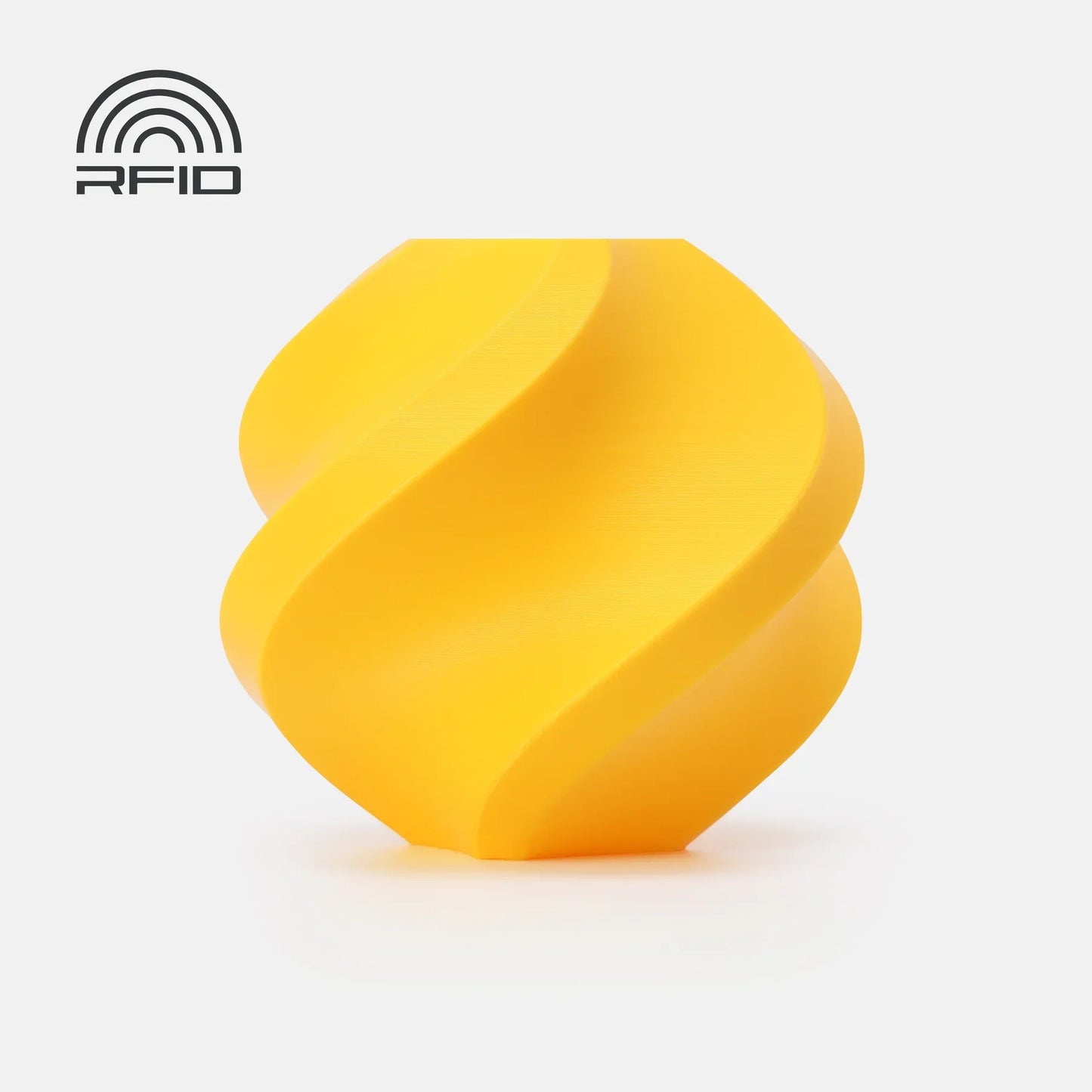
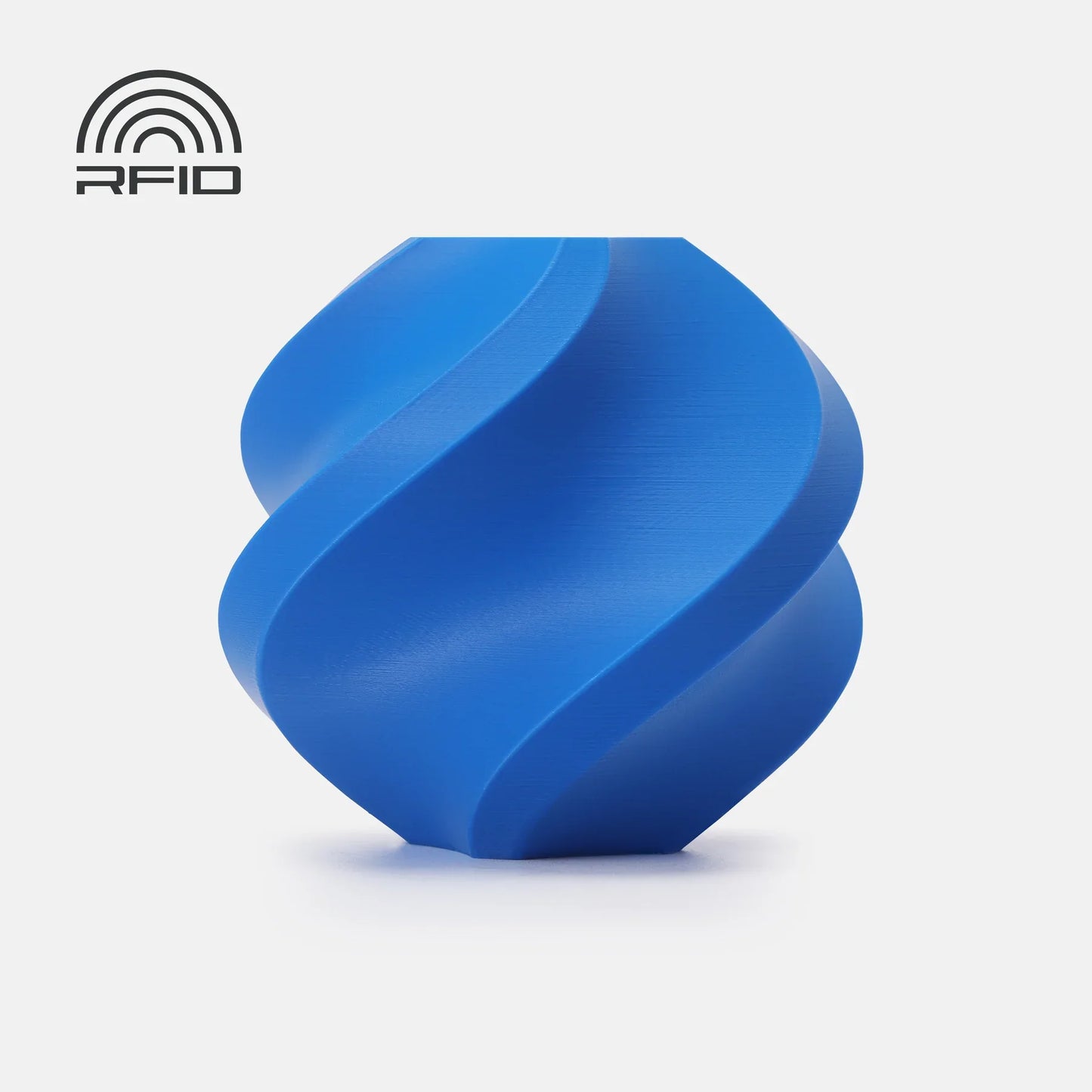
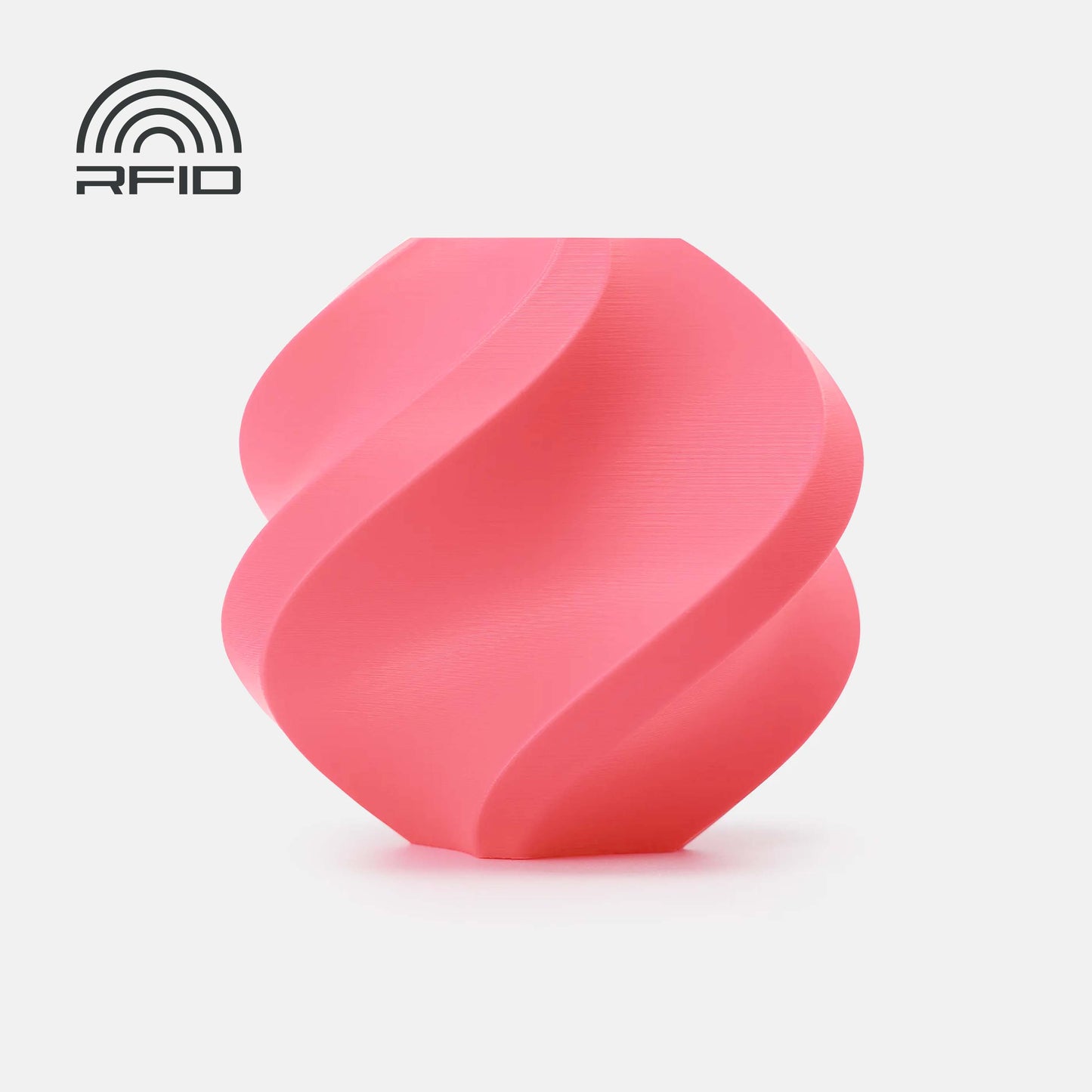
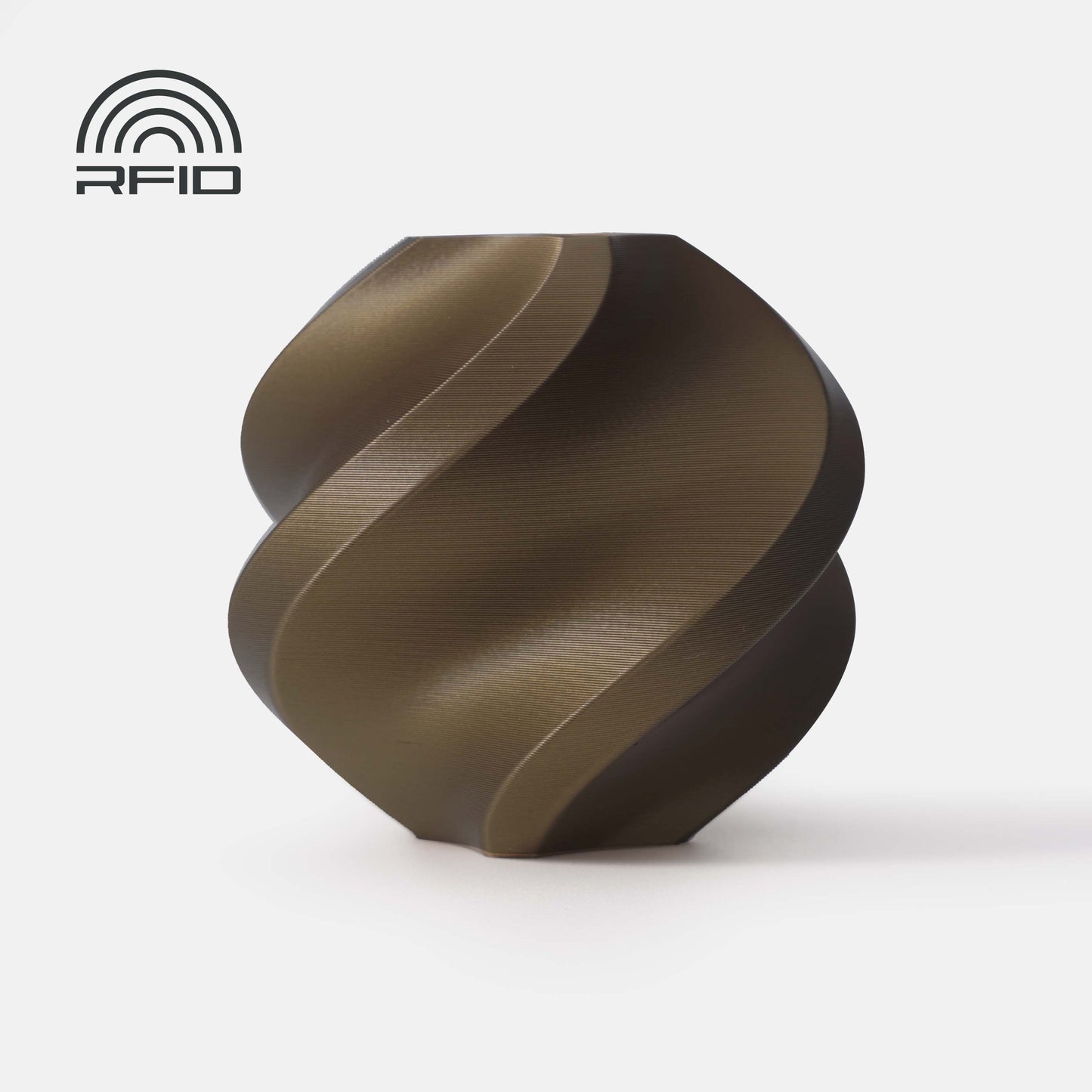
Bambu Lab Filament PLA Basic (Refill)

Genuine Bambu Lab PLA Basic — your everyday, reach-for-it-first filament. Clean prints, low warp, sticks to the bed without drama. This is the refill format: a spool-free roll you load onto a spool you already own.

Regular price $17.99 USD
Regular price $19.99 USD Sale price $17.99 USD
-10% Sold out
  • Reliable, low-warp prints straight out of the vacuum-sealed bag
  • RFID chip built into the roll core — AMS reads it automatically and sets temps for you
  • Consistent 1.75mm ± 0.03mm diameter, so extrusion stays steady and clog risk stays low
  • Compatible with AMS, AMS 2 Pro, AMS HT, and AMS Lite, plus any standard FDM printer
Color: Black (10101) (Refill)
Free Shipping$50 Ship FREE / Flat rates from $4.99 on $25+
30-Day ReturnEasy Returns
Ready to ShipSame-Day Shipping Before 2PM ET

Choose the correct format

This page

Refill (this page)

Filament only. Use it if you already have a Bambu reusable spool (or compatible empty spool) on hand.

With Spool

Ready to load as supplied — grab this one for a new color or your first order.

View Bambu Lab Filament PLA Basic (With Reusable Spool) →

Colors & stock

Each color has its own stock status — the selector above is the live source of truth.

Genuine Bambu Lab PLA Basic in refill format — the same vacuum-sealed, RFID-chipped roll that loads directly into AMS, just without the spool. If you've already got a reusable spool on hand, this is the efficient reload: lower cost per kilogram, same print performance, same automatic temp-setting when AMS reads the chip.

You're on the Refill page — pick the right format before you add to cart:

  • Refill (this page): Filament roll only. Requires a Bambu reusable spool or compatible empty spool to load onto.
  • With Spool: Comes ready to load as-is — the right pick for a new color or your first order.
  • Stock varies by color and weight — the variant selector above reflects live availability.

Why Makers Keep This Stocked

  • RFID Chip in the Roll Core: AMS reads it automatically and dials in nozzle and bed temps for you — no manual profile selection, no guessing.
  • 1.75mm ± 0.03mm Diameter Consistency: Tight tolerance means steady extrusion and low clog risk across long runs and high print speeds.
  • Low Warp, High Bed Adhesion: Sticks cleanly to PEI, textured, and cool plates. Releases predictably when the bed cools — no prying, no adhesion drama.
  • AMS Ecosystem Native: Compatible with AMS, AMS 2 Pro, AMS HT, and AMS Lite out of the box. Also runs on any standard FDM printer that takes 1.75mm PLA.
  • 1 kg / 2.2 lb Net Weight: Spool-free roll, so you're getting filament weight — not spool weight.

Real-World Maker Tips

  • The RFID Chip Lives in the Roll, Not the Spool. AMS reads the tag embedded in the filament roll's cardboard core — not in the spool itself. You keep full AMS smart features (auto temp, filament ID, runout detection) whether you're using Bambu's reusable spool or a compatible third-party hub.
  • Don't Dry It If It's Fresh From the Bag. A freshly opened, vacuum-sealed roll doesn't need drying before use. If the roll has been sitting open for more than a few days — especially in a humid shop — run it at 55°C for 8 hours. Moisture shows up as popping or crackling sounds during extrusion and rough surface texture on finished parts.
  • Max Speed Is a Ceiling, Not a Target. The 300mm/s figure is a material ceiling under ideal conditions. Real-world top speed depends on your specific hotend, cooling, and profile. Start at your printer's tested PLA Basic profile and push from there.

Full specs

Material PLA (Polylactic acid - plant-based plastic)
Diameter 1.75mm ± 0.03mm
Net weight 1kg (2.2 lb)
Density 1.24 g/cm³
Tensile strength 35 ± 4 MPa
Breaking elongation rate 12.2 ± 1.8%
Bending modulus 2750 ± 160 MPa
Nozzle temp 190–230°C
Bed temp (with glue) 35–45°C
Max print speed Below 300mm/s — actual speed depends on your hotend, cooling, and print profile; this is a ceiling, not a guarantee.
Drying (standard AMS / off-printer) 55°C for 8 hours
Drying (AMS 2 Pro / AMS HT) 55°C for 8 hours
AMS compatibility AMS, AMS 2 Pro, AMS HT, AMS Lite
Storage Vacuum-sealed with desiccant; reseal with desiccant after opening

Compatibility

Bambu Lab AMS / AMS 2 Pro / AMS HT / AMS Lite (auto RFID read), and any FDM printer that takes 1.75mm PLA on a standard spool.

How the refill swap works

Bambu_Refill_Spool Instructions

How to Install a Bambu Filament Refill

  1. Unlock Spool: Twist the spool halves counter-clockwise to separate and remove the empty core.
  2. Align Notch: Slide the new refill onto the main hub, matching the plastic tab with the inner cardboard notch. (Leave plastic straps on!)
  3. Lock & Snip: Reassemble the spool, twist clockwise until it clicks shut, then cut and remove the plastic binding straps.
  4. Trim & Load: Snip the filament tip at a 45° angle and feed it into your AMS or spool holder.

Pro-Tip: Never cut the binding straps before the spool is fully locked shut—unbound coils will expand immediately and cause severe AMS feeding jams.

FAQ

Built for Bambu's reusable spool geometry, but fits most standard 1.75mm spools with a similar hub diameter. If you're using a third-party compatible hub, test the fit before committing to a full print run.

No. The RFID chip is embedded in the filament roll's cardboard core — not the spool. AMS reads it automatically regardless of which spool you mount it on, so you keep auto temp-setting, filament ID, and runout detection.

Yes. This is standard 1.75mm PLA — it runs on any FDM printer that accepts that diameter. The RFID chip is only read by Bambu's AMS; on any other machine it's simply ignored. Mount it on a compatible hub and print normally.

PLA Basic is the general-purpose baseline — reliable, easy to print, good mechanical properties for most functional and decorative parts. PLA Matte has a flat, low-sheen surface finish. Silk has a high-gloss reflective surface built for aesthetics. PLA+ typically adds impact resistance and toughness. If you're not sure which to start with, Basic is the right answer.

Not straight out of the vacuum-sealed bag. If the roll has been sitting open for more than a few days — especially in a humid shop — dry it at 55°C for 8 hours before printing. Moisture-loaded PLA shows up as popping or crackling sounds during extrusion and rough surface texture on finished parts.

Reseal it in the original bag with the included desiccant packet, or transfer it to an airtight container with fresh silica gel. PLA absorbs ambient moisture over time, which degrades print quality. In a dry climate you have more margin; in a humid shop or basement, reseal after every session.